





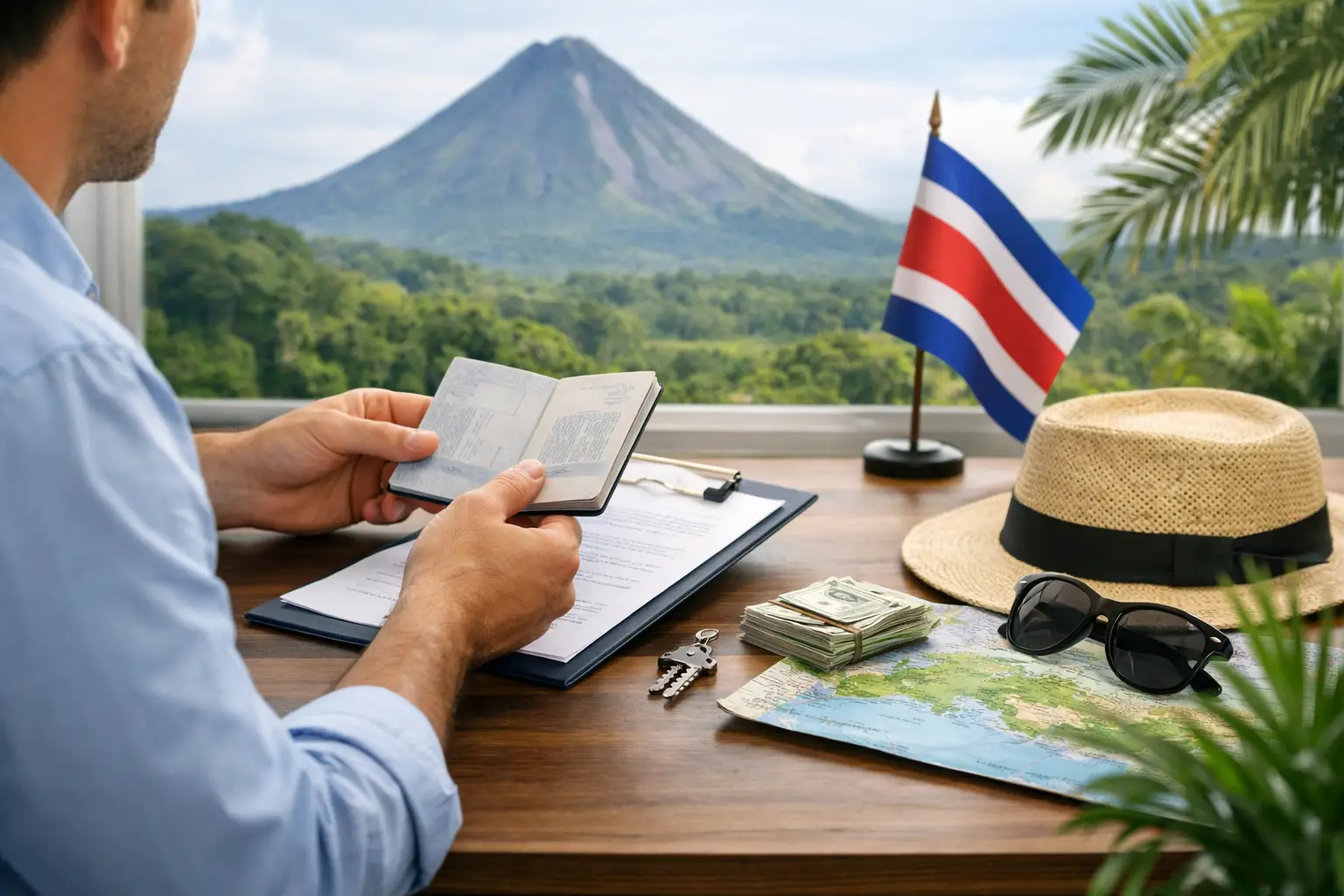
How to Open a Bank Account in Costa Rica Safely
Rent, utilities, local purchases, and receiving payments are all easier when you have a Costa Rican bank account. But if you are researching how to open bank account Costa Rica, expect a process that is more personal and document-focused than opening an account back home. Banks must verify a customer’s identity, address, tax status, and source of funds, and their internal requirements can vary by branch and by the type of account requested.
For a new resident, the goal is not simply to find any account. It is to establish a banking relationship that fits the way you will actually live in Costa Rica, while keeping your paperwork, money transfers, and personal information secure.
Can a Foreigner Open a Bank Account in Costa Rica?
In many cases, yes. Foreigners may be able to open an account in Costa Rica, although the available options and documentation requirements depend on whether you are a tourist, a residency applicant, or a legal resident with a DIMEX identification card.
Costa Rican banks generally conduct detailed compliance reviews. This is a normal part of banking, not a sign that something is wrong with your application. The bank is required to understand who you are, where your money comes from, and how you expect to use the account. Someone receiving a monthly pension will usually be evaluated differently from an investor, a business owner, or a remote worker receiving international income.
A tourist may be able to open certain limited accounts at some institutions, but policies change and not every branch handles nonresident applications in the same way. Legal residents typically have more options, especially once they have a DIMEX card and can show a stable Costa Rican address. If you are still in the residency process, ask the bank directly what it accepts in place of a DIMEX before gathering documents or making a special trip.
How to Open a Bank Account in Costa Rica: Documents to Prepare
Bringing organized paperwork is the best way to prevent unnecessary delays. A bank may request originals, copies, Spanish translations, or additional support documents depending on your profile. Before your appointment, confirm the current checklist with the specific bank and branch.
Most applicants should be ready to provide the following:
- A valid passport and, if applicable, a Costa Rican DIMEX card
- Proof of your Costa Rican address, such as a lease, utility bill, or other accepted local document
- Evidence of income or source of funds, such as pension statements, pay stubs, bank statements, business records, or investment income documentation
- Tax identification information from your home country, often including a U.S. Social Security number or taxpayer identification number for U.S. citizens
- A completed bank application and an initial deposit, if required
Some banks may also ask for a letter explaining your expected account activity. For example, you may need to state whether you will receive pension deposits, make international transfers, pay household expenses, or use the account for a Costa Rican business.
Do not assume that a document accepted by one bank will be accepted by another. If records must be translated into Spanish or authenticated, obtain the bank’s instructions first. Paying for a translation before confirming the requirements can create an avoidable expense.
U.S. Citizens Should Expect Tax Questions
Costa Rican financial institutions must comply with international reporting obligations, including rules affecting U.S. persons. A U.S. citizen or tax resident will commonly be asked to complete tax residency forms and provide a U.S. taxpayer identification number.
Having a Costa Rican account does not remove any U.S. reporting responsibilities. Depending on your balances and financial situation, foreign account reporting and tax filings may still apply. A qualified cross-border tax professional can advise you on your particular obligations before you move significant funds.
Choose the Right Bank Before You Apply
Costa Rica has public and private banks, as well as cooperatives and other financial institutions. A large public bank may offer an extensive branch and ATM network, which can be valuable if you will live outside the Central Valley or prefer in-person service. A private bank may offer a different customer experience, more specialized products, or stronger online tools for certain users.
The right choice depends on your priorities. Compare monthly fees, minimum balance rules, debit card charges, online banking features, international wire options, customer service availability, and the ease of depositing or withdrawing dollars and colones.
It is also wise to visit the branch you expect to use most often. Two branches within the same bank can differ in appointment availability, English-speaking staff, and familiarity with foreign applicants. A convenient location and a staff member who clearly explains the process can matter more than a promotional offer.
Most newcomers find it practical to maintain accounts in both Costa Rican colones and U.S. dollars. Colones are useful for day-to-day expenses, while a dollar account can simplify receiving funds or holding money before converting it. Still, review the exchange rate spread and transfer fees. Keeping all funds in one currency can expose you to exchange-rate changes over time.
The Account Opening Process, Step by Step
Opening an account is often completed in person. Plan for the visit to take longer than a routine bank appointment in the United States or Canada, particularly if the compliance department must review foreign documents.
First, contact the bank or branch and ask whether an appointment is required for foreign account openings. Request its current document list in writing if possible. Requirements can change, and an accurate checklist helps you avoid arriving with incomplete paperwork.
Next, organize your documents in a clear folder, including copies. Bring originals unless the bank specifically tells you not to. If your income is from more than one source, provide a simple, consistent explanation of each source rather than handing over unrelated statements without context.
At the branch, complete the application forms and answer the compliance questions carefully. Be precise about your expected deposits, transfers, and monthly transactions. Understating or guessing at your account activity can create complications later if your actual transactions look very different from what you reported.
The bank may approve the account that day, or it may send the application for additional review. Once approved, ask how to activate online banking, receive your debit card, set transaction alerts, and make international transfers. Keep copies of the forms you sign and record the name of the bank representative who assisted you.
Avoid Common Delays and Costly Mistakes
The most common delay is incomplete source-of-funds documentation. A bank statement showing a large balance may not be enough if it does not explain where the money originated. Pension income, a home sale, investment proceeds, consulting income, and business revenue can all require different supporting records.
Another common issue is using an address that the bank cannot verify. If you are staying temporarily with friends or have just arrived, ask what proof the bank accepts before listing that address. Requirements for proof of address are often stricter than newcomers expect.
Be especially cautious with anyone who promises a guaranteed account, asks you to send money to a personal account, or says you do not need to provide financial documentation. Legitimate banks have compliance procedures, and shortcuts can put your money and identity at risk. Visit an official branch or use verified bank contact information when arranging your appointment.
If you are opening an account for a corporation, do not treat it as a personal-account application. Business accounts normally require corporate records, proof of legal representation, ownership information, and documentation supporting the company’s activity. The review can take longer, so plan ahead if the account is necessary for an upcoming purchase, payroll, or business launch.
Timing Your Account With Your Residency Plans
Your banking plan should fit your immigration timeline. Some people open a limited account while they are visitors and update their information later after receiving residency. Others wait until they have a DIMEX card, local address, and a clearer picture of their income and spending needs. Neither approach is automatically better.
If you need an account quickly to pay rent or manage a property purchase, begin asking questions before arriving in Costa Rica. If you do not need immediate local banking, waiting until your documents are in order may be less stressful. ARCR can help expatriates understand how banking fits into the larger residency and relocation process, including the documentation that often overlaps with other local requirements.
A Costa Rican bank account is one practical piece of building a stable life here. Approach it with the same care you would give your residency paperwork: prepare your documents, ask clear questions, and choose a banking relationship that supports the life you intend to build in Costa Rica.