




How to Enroll in Costa Rica Social Security
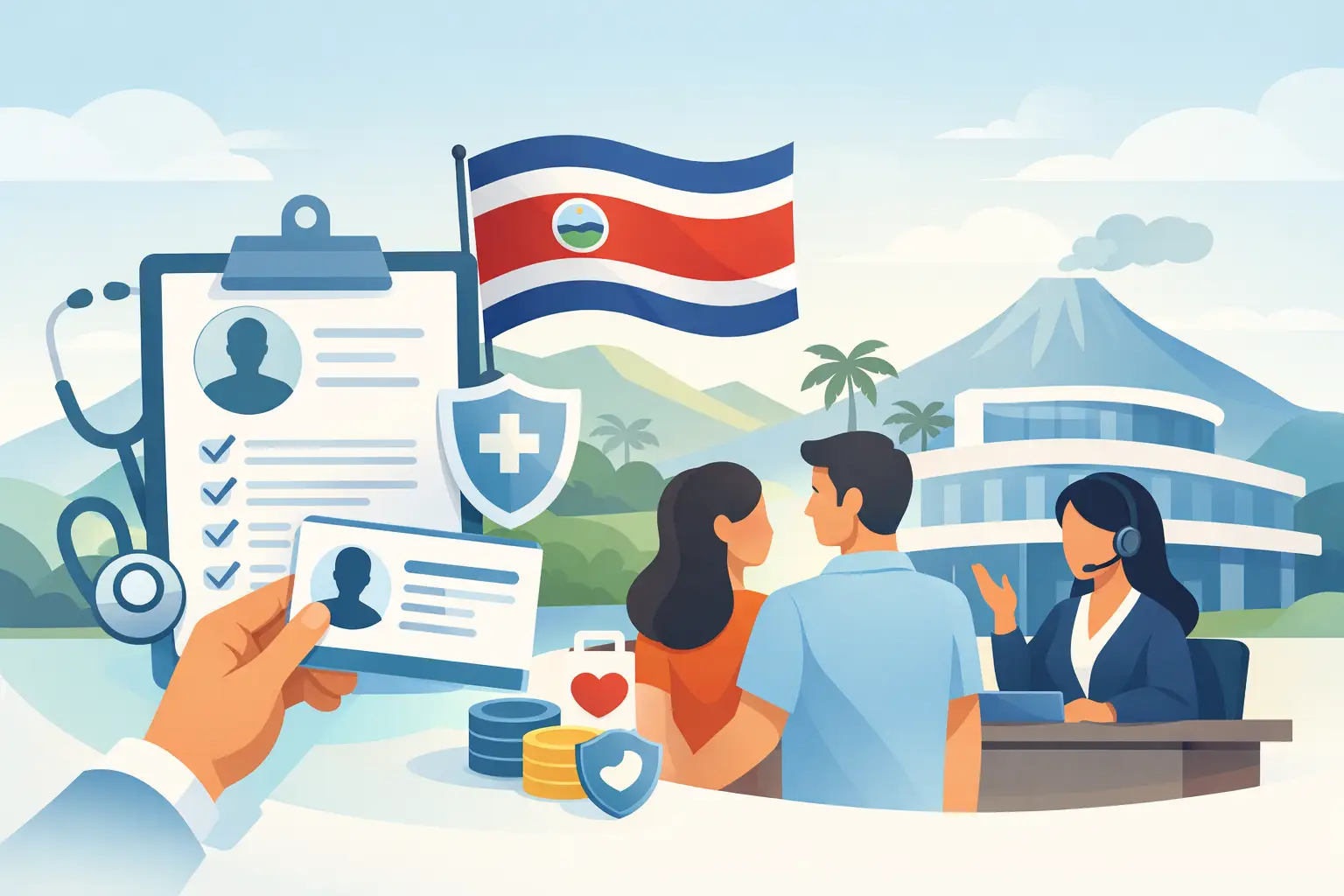
If you are applying for residency in Costa Rica, sooner or later you will run into CAJA. That is the local shorthand for Costa Rica’s public social security system, and understanding how to enroll in Costa Rica social security can save you time, stress, and expensive mistakes.
For many expats, this step feels more intimidating than it should. The rules are not always explained clearly, requirements can vary a bit based on your residency category and location, and the process usually involves both immigration and healthcare administration. The good news is that once you understand the sequence, it becomes much more manageable.
What CAJA is and why enrollment matters
Costa Rica’s social security system is administered by the Caja Costarricense de Seguro Social, commonly called CAJA. It covers public healthcare and certain social insurance functions. For most foreign residents, enrollment is not optional. It is a core part of maintaining legal residency status.
That point matters. Many newcomers assume CAJA is simply a healthcare option, like choosing an insurance plan. In practice, for most residency categories, joining CAJA is tied to your approval or finalization of residency. If you skip it, delay it too long, or enroll incorrectly, you can create problems for your immigration status.
CAJA also gives you access to Costa Rica’s public medical system. Some residents use it as their primary healthcare coverage. Others keep private insurance as well for faster access to specialists or private hospitals. That is a personal decision, but CAJA enrollment itself is usually part of the residency framework, not just a health preference.
How to enroll in Costa Rica social security: the basic sequence
The biggest source of confusion is timing. People often ask whether they should start with immigration, with CAJA, or with private insurance. In most cases, CAJA comes after you reach a certain point in your residency process, not before.
Generally, the sequence works like this: you apply for residency, your case advances or is approved, and then you complete the CAJA registration based on your immigration category and supporting documents. After that, you begin making monthly payments and receive proof of enrollment.
The exact timing can depend on whether you are a pensionado, rentista, investor, family-based applicant, permanent resident, or have another category. It can also depend on whether immigration asks for proof from CAJA before issuing final documentation, or whether you are completing enrollment after a resolution is issued. This is one reason people benefit from guidance - the broad rule is simple, but the practical details can vary.
Who usually needs to enroll
Most foreign nationals with Costa Rican residency, or those in the final stages of obtaining it, need to register with CAJA. That includes many retirees, investors, and dependents. Permanent residents generally need to be enrolled as well.
Tourists do not typically enroll in CAJA through the residency system because they are not residents. Digital nomads under separate legal frameworks may face different requirements. People employed by a Costa Rican company may also be handled differently because payroll contributions can be processed through an employer rather than through a voluntary independent enrollment structure.
This is where broad online advice can become risky. Two expats may both say they are "moving to Costa Rica," but one may be applying as a pensionado and the other as an employee. Their CAJA enrollment path may not be identical.
Documents you may need
When learning how to enroll in Costa Rica social security, expect document collection to be a significant part of the process. CAJA offices often ask for proof that connects your identity, immigration status, address, and income basis.
Requirements can change, and local offices sometimes interpret documentation a little differently, but common items include your passport, residency resolution or immigration documents, cédula if already issued, proof of address, and paperwork showing the income basis attached to your residency category. Some applicants may also need translated or certified documents, depending on what they are submitting and where the documents originated.
If you are self-paying into CAJA, the amount is often calculated from declared income or the financial basis of your residency category. That is another area where people get tripped up. They assume there is one flat fee for everyone, but there is not. The monthly contribution varies.
What the CAJA payment is based on
CAJA contributions are generally tied to income, not to age or simple resident status alone. For example, if you qualify for residency based on a pension or guaranteed income, that financial basis can affect your monthly payment calculation.
This can be reassuring for some retirees because the public system is often more affordable than they expect. For others, especially families or applicants with more complex financial structures, the amount may be higher than anticipated. It depends on how CAJA classifies your case and what income documents are accepted.
You should also expect that the quoted amount may not come from a quick online calculator. In many cases, the official figure is determined during the enrollment review. That means planning some flexibility into your monthly budget.
Where and how enrollment happens
Enrollment is usually handled through a local CAJA office. Some parts of the process may now be digitized or supported by email and appointments, but this is still an administrative procedure that often requires direct interaction with the system.
That is one reason newcomers can feel overwhelmed. The process may involve Spanish-language forms, office-specific instructions, and follow-up requests for additional paperwork. Even when the legal requirement is straightforward, the practical experience can be slow.
If your paperwork is complete and your residency stage is clear, the process can move fairly smoothly. If there are inconsistencies in your name, address, financial documents, or immigration file, delays are more likely. Small mismatches matter more than many applicants expect.
Common problems expats run into
A lot of frustration around how to enroll in Costa Rica social security comes from preventable issues. One of the most common is showing up too early or too late in the residency timeline. Another is assuming a friend’s experience will match your own.
Translation and certification problems also cause delays. If a supporting document was not prepared correctly for Costa Rican authorities, you may have to go back and fix it before CAJA accepts it. Address verification can be another sticking point, especially for people staying temporarily with friends, moving between rentals, or using informal housing arrangements.
Then there is the simple challenge of bureaucracy. Costa Rica is welcoming, but government processes can still be slow, paper-heavy, and particular. Patience helps. So does having someone review your file before you present it.
Should you rely only on CAJA for healthcare?
That depends on your priorities. CAJA is a major benefit of legal residency and gives access to public healthcare throughout the country. Many residents appreciate the affordability and breadth of the system.
At the same time, some expats choose to carry private insurance in addition to CAJA. The trade-off is usually cost versus speed and flexibility. Private coverage can make it easier to access certain specialists, private hospitals, or shorter wait times. CAJA, on the other hand, is part of the legal and social framework of residency and remains a foundational piece of healthcare access.
For families, retirees with ongoing medical needs, or anyone managing prescriptions, it is worth thinking about this before enrollment is complete. CAJA solves an important legal and healthcare requirement, but it may not answer every personal preference about medical access.
Getting help can save more than time
Many expats try to handle CAJA alone because it looks simple on paper. Sometimes that works. But if your residency is still in progress, your documents originated outside Costa Rica, or you are unsure how your contribution should be calculated, professional guidance can reduce the risk of delays and avoidable errors.
This is especially true if you are trying to coordinate multiple steps at once - residency approval, document translation, legal review, insurance questions, and local registration tasks. A trusted relocation support team can help connect those pieces so you are not solving each problem in isolation. ARCR often assists clients with exactly this kind of practical coordination, which can make the process feel far less uncertain.
A realistic mindset for the process
The best way to approach CAJA is to treat it as a required administrative milestone, not as a mystery. It may take a few appointments. You may need to clarify paperwork. You may hear slightly different instructions from different offices before everything is finalized.
That does not mean anything is wrong. It usually means you are dealing with a real government process in a new country, in a different language, with residency rules layered on top.
If you prepare early, confirm your immigration stage, gather the right supporting documents, and get help when the facts are unclear, enrolling in CAJA becomes far more straightforward. And once it is done, you are not just checking a box - you are putting a key part of your life in Costa Rica on solid ground.