





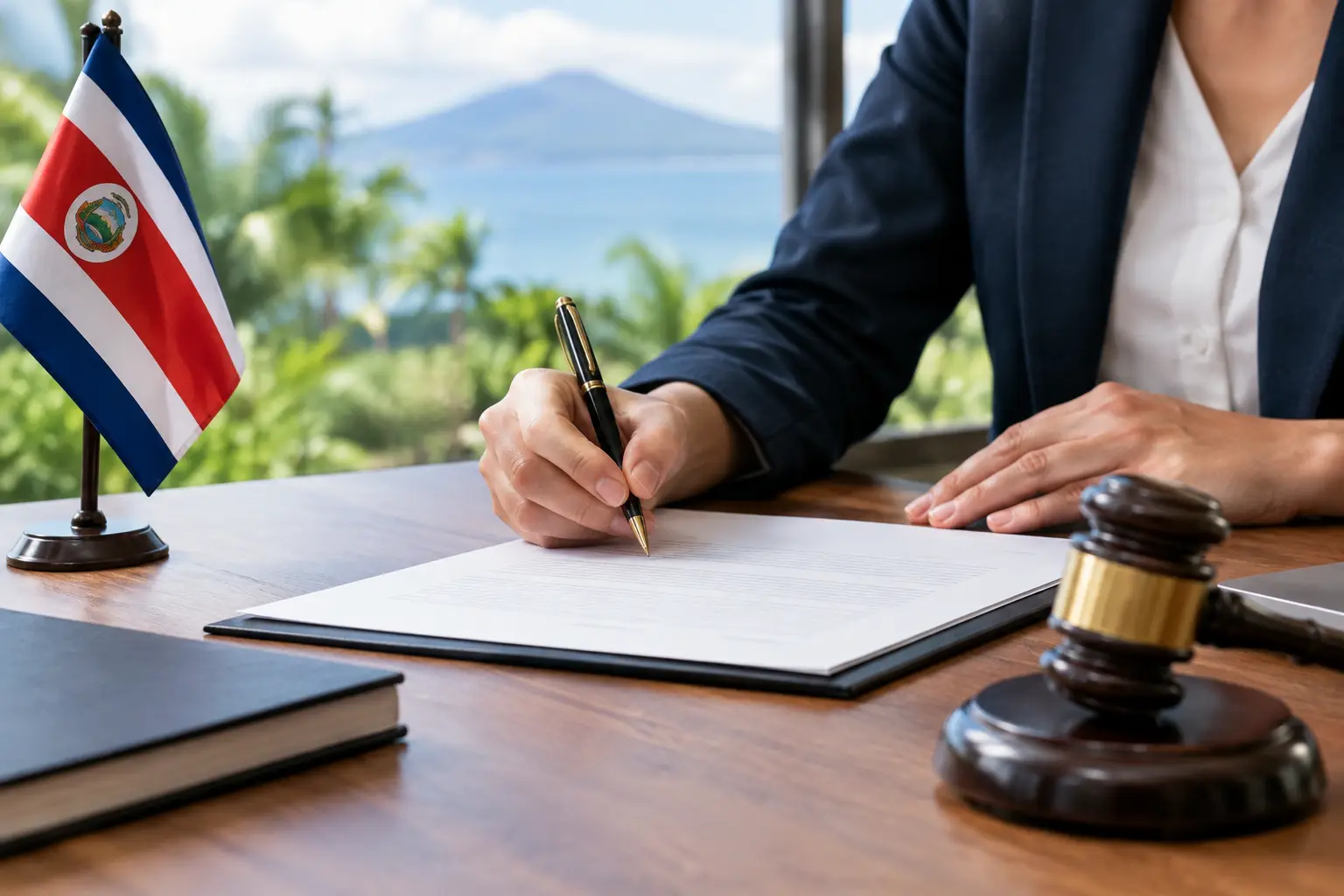
How to Create a Costa Rica Power of Attorney
A property closing is scheduled, a bank requires a signature, or a residency matter needs attention while you are still abroad. These are the moments when a power of attorney can keep a Costa Rica plan moving. The question often appears online as “how to create Costa Rica power attorney,” but the practical answer depends on exactly what you need another person to do and how much authority you are prepared to give them.
In Costa Rica, a power of attorney is called a poder. It can be a useful legal tool for buyers, residents, business owners, and families, but it is not a document to copy from a generic online form. The wrong type of authority, unclear language, or improper execution can delay the transaction you hoped to simplify.
Start With the Authority You Actually Need
Costa Rican law recognizes different forms of powers of attorney. The right choice is driven by the transaction, not by convenience.
A poder especial, or special power of attorney, gives authority for a specific act or a defined set of acts. For example, you may authorize someone to sign closing documents for a particular property, obtain a document from a government office, or manage a defined step in a residency process. It is generally the sensible option when the task has a clear purpose and endpoint.
A poder general provides broader administrative authority. It may be appropriate where a trusted representative must handle a range of ongoing matters, although its scope is still more limited than the broadest form of Costa Rican power of attorney.
A poder generalísimo grants very extensive authority. Depending on the wording and legal requirements, it can allow the representative to take significant actions involving assets, contracts, and other affairs. Because this authority is so broad, it should be considered carefully and drafted with precision. For many expats, it is more authority than a one-time property purchase or administrative task requires.
The key trade-off is simple: a narrow power can prevent unintended actions but may not cover a future need. A broad power offers flexibility but requires exceptional trust and a clear understanding of the risk. A Costa Rican attorney can advise whether your intended action requires a public deed, registration, or specific language.
How to Create a Costa Rica Power of Attorney
Begin by describing the task in plain English before anyone prepares a legal document. Identify who will act for you, what they may sign or request, whether they can handle funds, and when their authority should end. A vague instruction such as “handle my Costa Rica affairs” can create confusion and may be unsuitable for the purpose you have in mind.
You will usually need the following information:
- Your full legal name, nationality, passport details, and current address
- The representative’s full legal name, identification details, and address
- A precise description of the authority being granted
- Details of the asset, company, transaction, or government procedure involved
- Any limits, expiration date, or conditions on the authority
If the power involves real estate, provide the property details and explain whether the representative may merely sign closing documents or also negotiate, receive funds, register documents, or take other actions. If it involves a Costa Rican corporation, the attorney should first confirm who has authority to act for the company and whether corporate approvals are needed.
Once the purpose is clear, a Costa Rican attorney should prepare or review the document. This is especially important if the document will be used before the National Registry, a bank, a municipality, immigration authorities, or in a property transaction. The institution receiving the power may have its own requirements, and those requirements can affect the format and wording.
Sign in the Correct Form
Many important Costa Rican powers of attorney are executed through a Costa Rican notary public as a public deed. A notary in Costa Rica has a substantially different legal role than a typical U.S. or Canadian notary. Costa Rican notaries are attorneys authorized to formalize certain legal acts and, where applicable, present them for registration.
If you are already in Costa Rica, you may sign before the Costa Rican notary handling the matter. Bring your valid passport and any supporting documents requested in advance. Do not sign until the attorney has confirmed the final version and explained the authority you are giving.
If you are outside Costa Rica, there may be more than one way to execute the document. In some situations, signing through a Costa Rican consulate may be possible. In others, you may sign before a local notary and obtain an apostille in the country where the document is executed. The document may then need certified translation into Spanish and formal incorporation into a Costa Rican notarial record.
The appropriate route depends on your location, the kind of power, and the receiving institution. A local notarization alone does not automatically make a document ready for use in Costa Rica. Likewise, an apostille verifies the public authenticity of a signature or seal; it does not correct unclear powers or guarantee that the document grants the authority a Costa Rican institution requires.
Registration May Be Required
Some powers of attorney must be recorded with Costa Rica’s National Registry to be effective for their intended purpose, particularly when they concern broad authority or transactions involving registered assets. Your attorney can determine whether registration applies and submit the necessary filing.
Registration is not merely an administrative detail. A bank, buyer, seller, or government office may check the Registry to confirm that the power exists, that the representative’s authority is current, and that no revocation has been recorded. Allow time for this step when planning a closing or other time-sensitive transaction.
If the document is for a limited task, ask whether the authority can expire automatically after completion. A defined end date can provide additional protection, particularly when you do not expect to have an ongoing relationship with the representative.
Choose Your Representative Carefully
A power of attorney is only as safe as the person and safeguards behind it. Your representative might be a spouse, adult child, trusted friend, attorney, or another qualified professional. Familiarity is valuable, but it should not replace careful judgment.
Before granting authority, consider whether the person has a conflict of interest, how they will communicate with you, and whether they have experience with the particular task. For financial or real estate matters, establish expectations in writing about approvals, receipts, reporting, and how funds will be handled. You can also require the representative to consult you before taking defined actions.
Be particularly cautious about granting broad powers to someone you have met only through a transaction, social media group, or unsolicited recommendation. Costa Rica has many reputable professionals, but expats are also targets for schemes built around unfamiliarity with local procedures. Independent legal advice is a practical safeguard, not an unnecessary delay.
Know How Revocation Works
Circumstances change. A transaction may end, a representative may no longer be appropriate, or you may simply want to regain direct control. A power of attorney can generally be revoked, but the revocation should be handled formally and communicated to the representative and institutions that may rely on the original document.
When a power was registered, the revocation may also need to be registered. Do not assume that telling someone verbally, or sending an email, is enough to protect you. Keep copies of the original power, any registration information, and the revocation documents in a secure place.
It is also wise to review existing powers after a divorce, death in the family, sale of a property, change in business ownership, or major move. A document that once served a useful purpose may no longer reflect your wishes.
Avoid the Most Common Delays
Most problems arise before signing. Names that do not match passport records, missing apostilles, untranslated supporting documents, expired identification, and overly broad or incomplete instructions can all create costly delays. Property and corporate matters may also require a review of Registry information before the power is drafted.
Give your Costa Rican legal team enough lead time, especially if you are signing abroad. Apostilles, consular appointments, certified translations, courier delivery, and registration can take longer than expected. Rushing a document that grants legal authority is rarely worth the risk.
For expats managing a move, property purchase, residency process, or business matter from another country, having an attorney-backed process brings clarity at the point where small paperwork errors can become major obstacles. ARCR helps foreign residents coordinate practical relocation needs with experienced local support.
A well-prepared power of attorney should make life easier without asking you to surrender more control than necessary. Start with the specific task, choose a representative you trust, and have the document prepared for the Costa Rican institution that will actually rely on it.