





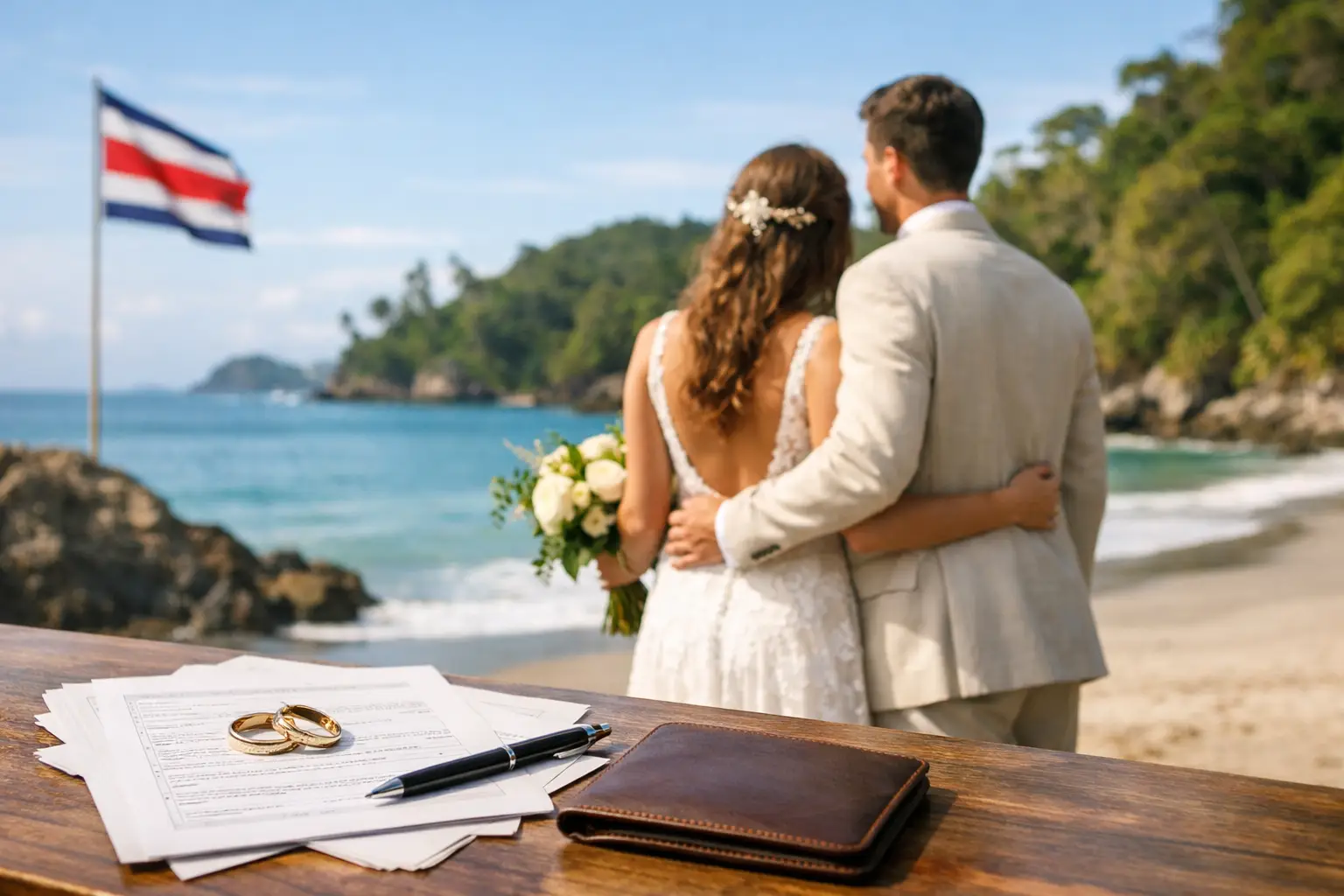
Getting Married in Costa Rica Legal Requirements
A beach ceremony in Costa Rica can feel wonderfully simple. The paperwork behind it is not always simple, especially if you are flying in from the U.S. or planning a move here afterward. If you are researching getting married in Costa Rica legal requirements, the key is to understand which steps are truly legal necessities, which are logistical details, and where delays usually happen.
For foreign couples, Costa Rica is generally welcoming, but marriage here is still a legal act handled under Costa Rican rules. That means your officiant, your identification, your witnesses, and the registration of the marriage all matter. It also means that what worked for a friend at a resort a few years ago may not be the best model for your own plans today.
What getting married in Costa Rica legal requirements usually involve
In Costa Rica, a legal marriage is typically performed by a Costa Rican attorney who is also authorized as a notary public, or by a Catholic priest if the marriage is religious and recognized under local law. Many foreign couples are surprised by this because they expect a judge, clerk, or standard civil officiant. Here, the notary-attorney often plays the central legal role.
That difference matters because the notary is not just present for the ceremony. This professional is also responsible for preparing and filing the legal act so the marriage can be registered properly. If the paperwork is incomplete or names do not match your passports and civil records, the issue may not appear until registration, which can create frustration after the wedding is over.
Costa Rica does not require residency for foreigners to marry here. In most cases, tourists can marry legally as long as they meet the legal conditions and provide the required information. That makes the country attractive for destination weddings, but it also creates a false sense that the process is automatic. It is not. You still need a legally qualified officiant and accurate documentation.
Basic legal conditions to marry in Costa Rica
Both parties must be legally free to marry. That sounds obvious, but it carries real paperwork implications. If either person was previously married, the prior marriage must have ended legally through divorce, annulment, or death. If there is any inconsistency between your current legal name and your prior civil records, you may need supporting documentation to show the chain clearly.
You must also be of legal age, or otherwise meet the conditions recognized under Costa Rican law. For most foreign couples planning a destination wedding or relocation, this is straightforward. The practical issue is not age eligibility but proving identity and civil status correctly.
Passports are usually the primary form of identification for foreign nationals. Your names should appear exactly as they do in the passport you present at the ceremony and in any supporting documents. Even minor discrepancies, such as omitted middle names or inconsistent surnames, can create avoidable problems.
Documents you may need before the ceremony
The exact document package can vary based on your nationality, your personal history, and the notary handling the marriage. Still, most foreign couples should expect to provide valid passports and personal information such as parents' names, nationalities, dates of birth, occupations, and addresses.
If either party has been married before, supporting proof is commonly required. That may include a divorce decree or a death certificate for a former spouse. Some officiants or planners may also request a birth certificate or an affidavit regarding single status, although practices can differ. This is one of those areas where general online advice can be misleading. The right answer often depends on who is preparing and registering the marriage.
Foreign-issued documents may need translation into Spanish if they are not already in Spanish. In some cases, they may also need authentication or apostille treatment before they are accepted for official use in Costa Rica. Whether this is strictly necessary for your ceremony packet depends on the document, the nationality involved, and how the notary is handling the registration.
That is why it helps to verify requirements early rather than ordering a stack of documents at the last minute. If a document needs to be reissued, apostilled, or translated, international timing can become the real obstacle.
Witness requirements and why they matter
Costa Rica generally requires witnesses for a legal marriage ceremony. In many cases, two witnesses are used, and they are expected to be adults carrying valid identification. The officiant will confirm what is required for your specific ceremony.
For destination weddings, this can be simple if you are traveling with family or friends. It becomes more complicated if you are eloping or planning a very private event. Some wedding providers help arrange witnesses, but you should never assume that piece is covered unless it is confirmed clearly in writing.
Witness details matter because their names and identification information become part of the legal act. A witness who forgets their passport or arrives with inconsistent identification can create stress on the wedding day.
Timing, registration, and the marriage certificate
One of the most misunderstood parts of getting married in Costa Rica legal requirements is the difference between the ceremony itself and the official registration afterward. The ceremony may happen on your chosen date, but the marriage is then recorded through the Costa Rican civil registration system.
Your officiating notary typically submits the marriage protocol for registration after the ceremony. This step is essential. Without proper registration, you may face difficulties later when requesting official copies or using the marriage record for immigration, name changes, insurance enrollment, or residency processes.
You should also ask in advance how and when you will receive proof of marriage. Some couples expect a U.S.-style certificate handed over immediately after the ceremony. In Costa Rica, the timing for obtaining the registered marriage certification may be different. If you need the certificate quickly for legal or travel reasons, say so early.
If you plan to use your Costa Rican marriage certificate outside Costa Rica, you may need certified copies, official translations, or apostille processing depending on the destination country. This is particularly relevant for U.S. couples who will update Social Security records, passports, bank accounts, or immigration files after the wedding.
Common issues foreign couples run into
The biggest problems are usually not dramatic legal barriers. They are preventable administrative mistakes. Names do not match across documents. A divorce judgment is missing a page. A planner assumes translations are unnecessary. A couple books flights without allowing enough time to gather authenticated records.
Language can also create confusion. A vendor may describe a ceremony as legal when parts of the legal filing are still pending. Or a couple may not understand whether they are booking a symbolic event or a fully recognized civil marriage. Those are very different things.
There is also the issue of relying on outdated information. Costa Rican procedures can change, and individual circumstances matter. Someone who is a first-time spouse with a straightforward passport record has a different paperwork path than someone with dual nationality, a prior divorce, or a recent legal name change.
If you are marrying here and planning residency too
For some couples, the wedding is not just a destination event. It is part of a bigger relocation plan. If that is your situation, accuracy matters even more.
A marriage certificate may later support residency applications, dependent status, health system enrollment, inheritance planning, or asset structuring. A mistake that seems small during wedding preparation can become much larger when it shows up in a residency file months later. This is one reason many expats prefer guidance from professionals who understand both family law paperwork and the wider relocation process.
If you know you will be dealing with translated civil records, legal filings, or residency-related follow-up, getting organized early can save time and expense. In some cases, couples benefit from working with experienced local support, such as ARCR, when marriage paperwork overlaps with broader plans for living in Costa Rica.
How to prepare without overcomplicating it
Start with one qualified source who can tell you what applies to your exact case. That may be the officiating notary or a trusted legal support provider familiar with foreign documents. Confirm what documents are required, whether translations or apostilles are needed, how many witnesses are necessary, and how the marriage will be registered.
Then check every name, number, and date against your passport and civil records. This is not busywork. It is often the difference between a smooth filing and a delayed one.
Finally, give yourself more lead time than you think you need. International document requests rarely move faster because a wedding date is approaching. If your plans involve both a ceremony and a future life in Costa Rica, careful preparation is one of the best ways to protect both.
A wedding here should feel joyful, not uncertain. When the legal side is handled correctly, you can focus on the reason you came in the first place - starting the next chapter with confidence.