





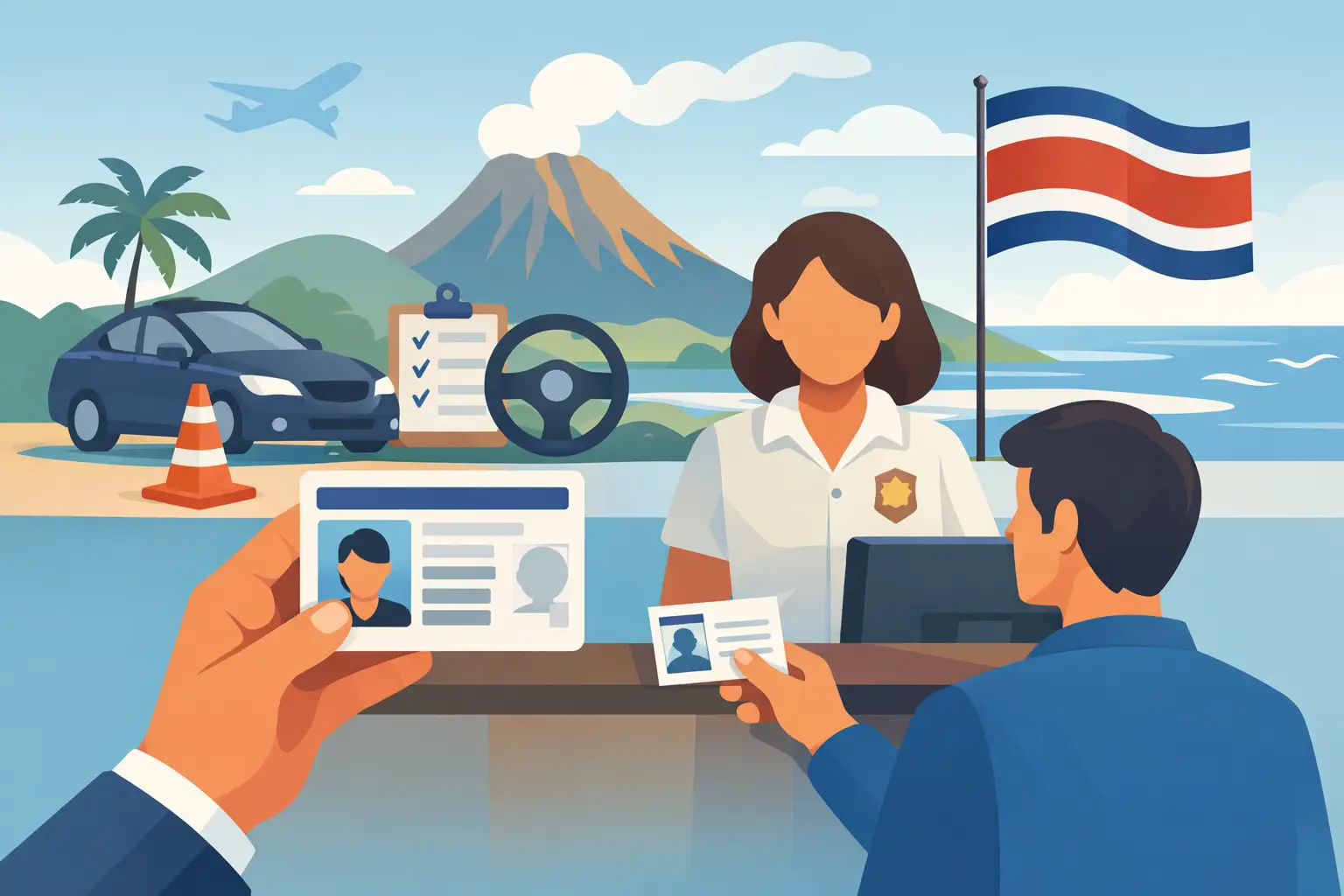
Costa Rica Drivers License for Foreigners
Getting on the road in Costa Rica sounds simple until you hear three different answers about how long you can drive, whether residency changes the rules, and what traffic police will actually ask to see. For many newcomers, the Costa Rica drivers license for foreigners question comes up early - often right after buying a car, signing a lease, or planning a border run.
The good news is that the rules are manageable once you separate tourist status from residency status. The less comforting news is that small misunderstandings can lead to fines, insurance problems, or delays when you are trying to handle other relocation tasks at the same time.
Costa Rica drivers license for foreigners - the basic rule
If you are in Costa Rica as a tourist, you can generally drive using your valid foreign driver’s license along with your passport. In practice, the period you are allowed to drive is tied to your legal stay in the country as granted by immigration, not an unlimited right based only on having a license from the United States, Canada, or another home country.
That distinction matters. If your tourist permission expires, your ability to drive on your foreign license also expires. Many people assume the date on their foreign license is the only date that counts. It is not.
Once you become a legal resident in Costa Rica, the expectation changes. Residents are generally required to obtain a Costa Rican driver’s license rather than continue driving indefinitely on a foreign one. This is one of the more common transition points people miss during the residency process because they are focused on DIMEX cards, Caja enrollment, insurance, and banking.
Who can drive on a foreign license
A foreign license is typically accepted if it is valid and if your immigration status allows you to be in the country legally as a tourist. You should also carry your passport because it helps show the entry date and supports the period you are authorized to remain in Costa Rica.
If your license is damaged, expired, or hard to read, expect complications. If it is in a language other than Spanish or English, you may need additional supporting documentation or an official translation depending on the situation. What works at a car rental counter does not always mean it will satisfy every official process later.
For short-term visitors, this arrangement is usually straightforward. For people living in Costa Rica part-time or preparing for residency, it gets more nuanced. The longer you stay and the more established your life becomes here, the more important it is to understand when you should convert to a local license.
When foreigners need a Costa Rican license
If you have obtained legal residency, you should plan to get a Costa Rican license. This applies to many retirees, investors, remote workers with qualifying status, and families who are settling in the country long term.
The reason is not just legal compliance. A local license can make life easier in everyday situations, from traffic stops to identification needs to certain administrative tasks. It also reduces the uncertainty that comes from relying on tourist-status driving privileges after your circumstances have changed.
There is also a practical issue many expats overlook: insurance and liability questions can become more complicated if you are driving under an arrangement that no longer matches your actual immigration status. That does not mean every case will end badly, but it does mean the risk is not worth ignoring.
How to get a Costa Rican license as a foreigner
For many applicants, the process involves validating or homologating an existing foreign license rather than starting from zero as a brand-new driver. The specific steps can vary depending on your nationality, residency status, and the current rules in force when you apply, but the process usually includes document review, an appointment, and a medical evaluation.
You will generally need your passport, proof of legal status in Costa Rica, your valid foreign driver’s license, and supporting identification such as your DIMEX if you are already a resident. In many cases, you also need a medical certificate issued through the authorized local system. Appointments are typically handled through the licensing authority, and availability can vary by location and season.
This is where preparation pays off. If a name is inconsistent across documents, if your residency category is still in transition, or if your foreign license is close to expiration, what looks like a quick appointment can turn into several extra weeks of back-and-forth.
Documents and details that commonly cause delays
A surprising number of problems come down to small mismatches. Your passport may show one version of your name, your foreign license another, and your residency records a third. Hyphenation, middle names, and married names can all create confusion.
Timing also matters. If you wait until your foreign license is about to expire, you may lose the easier path for recognition. Likewise, if you are newly approved for residency but have not updated related records, you may need to pause before the licensing office can process your application smoothly.
Medical certificates are another point to watch. They are typically valid for a limited period, so getting one too early can create an unnecessary repeat step if your appointment is delayed.
What to expect at the appointment
Most people are relieved to find that the appointment itself is not the hardest part. The real challenge is showing up with exactly what is required, in the correct format, and under the correct legal status.
At the appointment, officials review your documents, verify eligibility, and process the issuance of the Costa Rican license if all conditions are met. Depending on the category and the current procedure, you may have a photo taken and complete final administrative steps onsite.
It helps to approach the appointment with patience. Costa Rican systems are workable, but they are not always fast, and rules can be updated. Going in with old advice from a friend who applied two years ago is one of the easiest ways to waste a morning.
Common mistakes foreigners make
The biggest mistake is assuming tourist driving rules and resident driving rules are interchangeable. They are not. Another common issue is carrying only a foreign license without the passport that supports lawful stay.
Some people also buy a vehicle before they understand the licensing timeline. Owning a car does not give you any special exception. If your legal basis to drive is weak or expired, the car sitting in your driveway does not change that.
Then there is the advice problem. Costa Rica has no shortage of informal experts. Some are well-meaning, some are repeating outdated information, and some are simply wrong. Driver’s license rules often overlap with immigration status, so getting guidance from someone who understands both sides is far safer than relying on social media comments.
Why this process feels harder than it should
For many foreigners, the driver’s license issue is frustrating because it is not really about driving skills. It is about matching multiple government systems - immigration, identification, medical certification, and transportation administration - at the same time.
That is why a process that seems simple on paper can feel more demanding in real life. If you are also applying for residency, setting up insurance, translating documents, and getting established in a new country, even one missed requirement can create outsized stress.
Support can make a real difference here, especially for applicants who want to avoid trial and error. Organizations such as ARCR help expats understand the sequence, prepare documentation correctly, and reduce the risk of costly mistakes.
A practical way to think about your next step
If you are visiting Costa Rica temporarily, focus on keeping your foreign license valid and making sure your legal stay is current. If you are moving toward residency or already have it, treat your Costa Rican license as part of settling in properly, not as an optional errand for later.
The smoother path is usually the one that starts early. Ask what applies to your status now, confirm what documents are needed before you book anything, and do not assume that a rule that worked for someone else will fit your case exactly.
A driver’s license may seem like a small administrative detail, but in day-to-day life it affects freedom, security, and peace of mind. When the rest of your move already involves enough unknowns, this is one area where clarity is worth getting upfront.