





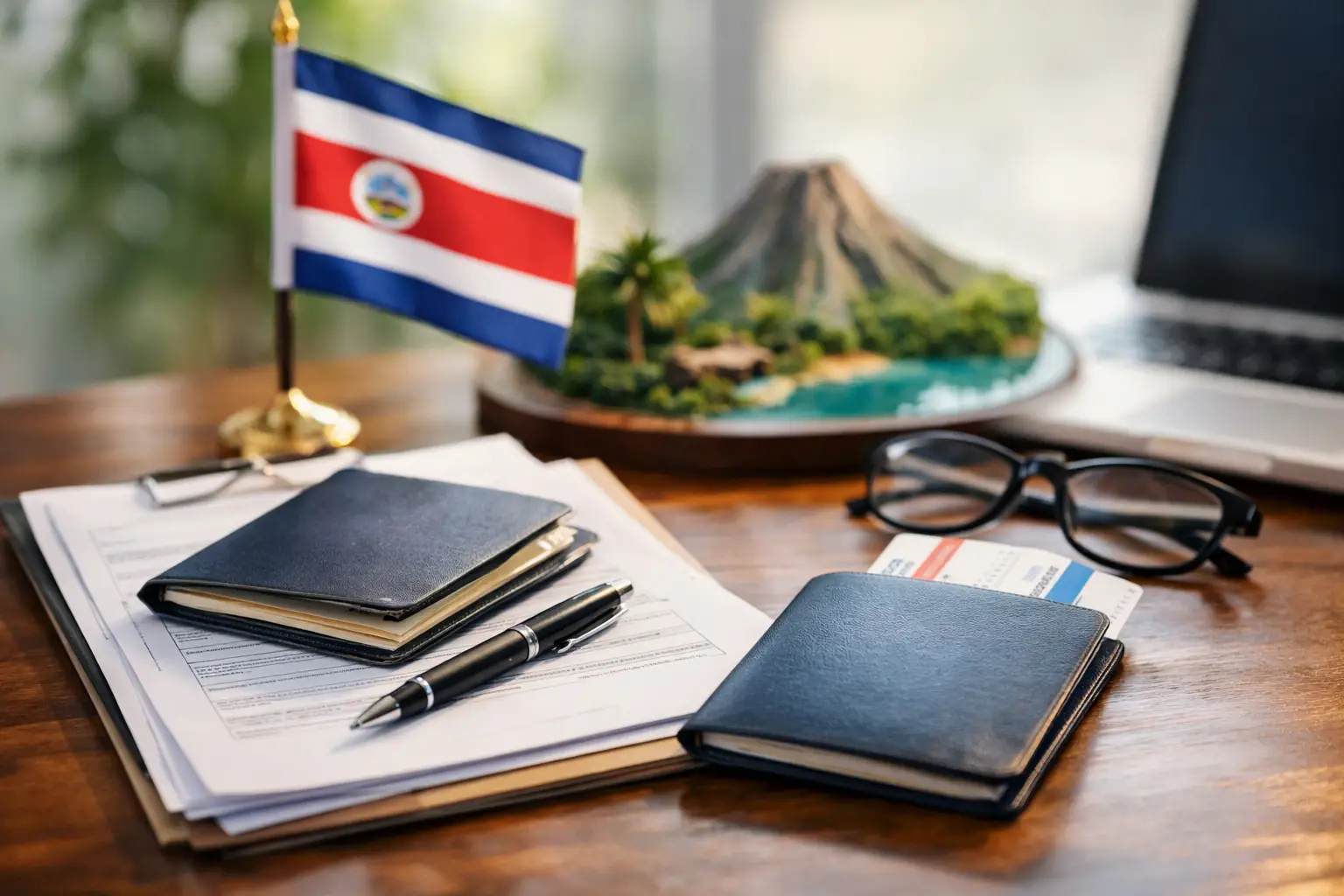
Best Documents for Residency Interview in Costa Rica
A residency appointment can feel deceptively simple: you arrive with a folder, submit paperwork, answer questions if asked, and wait for the next step. In reality, the best documents for residency interview appointments in Costa Rica are the ones that are current, properly legalized, correctly translated, and matched to the residency category you are applying under. One outdated certificate or missing authentication can delay an otherwise well-prepared application.
Costa Rica’s immigration process is document-driven. The officer reviewing your file needs to see a clear, consistent story: who you are, why you qualify for residency, and whether the foreign documents in your file are valid for use in Costa Rica. Preparation is less about bringing a large stack of paper and more about bringing the right evidence in the right form.
Start With Your Residency Category
There is no single universal residency checklist. A pensionado applicant, for example, must document a qualifying lifetime pension. A rentista applicant needs to demonstrate qualifying income or a deposit structure that meets current immigration rules. An investor may need evidence of a qualifying investment, while an applicant seeking residency through a Costa Rican spouse, parent, or child will need civil documents proving that relationship.
Before gathering documents, confirm the exact category you will use. Trying to substitute documents from one category for another can create confusion or lead to requests for additional evidence. If a family is applying together, each person’s documents must also be considered individually. A spouse or dependent child may qualify through the principal applicant, but still needs their own identity and civil-status records.
Immigration rules, financial thresholds, forms, and appointment procedures can change. Treat any checklist as a planning tool, not a permanent guarantee. Verify current requirements before ordering certificates or sending documents for apostille.
Best Documents for a Residency Interview File
For most temporary residency applications, a well-organized file includes core identity documents, civil records, proof of financial eligibility, and category-specific support. Bring originals when required, along with clean copies prepared according to the current filing instructions.
Passport and Entry Records
Your valid passport is central to the application. Bring the original passport and copies of the identification page, current Costa Rican entry stamp, and any other pages requested for your file. Check the expiration date well before your appointment. A passport nearing expiration can create complications, especially if immigration needs time to process the application.
If you have changed your name, make sure the name on your passport matches the name used across supporting records. Where it does not, include the legal document that explains the change, such as a marriage certificate, divorce decree, or court order.
Birth Certificates and Civil-Status Documents
Birth certificates are commonly required for applicants and dependents. Married applicants should generally be prepared with a marriage certificate, and applicants whose marital status has changed may need divorce decrees, death certificates, or other records that explain those changes.
These documents do more than establish family relationships. They help immigration confirm that names, dates of birth, and personal details are consistent throughout the application. Even a small discrepancy, such as a middle name appearing in one document but not another, is better addressed proactively than left for an officer to question later.
Police Clearance Certificate
A police clearance, often called a criminal background check, is among the most time-sensitive documents in a residency file. It typically must come from the appropriate authority in the country where you have lived and meet Costa Rica’s requirements for recency.
Do not obtain it too early. A perfectly valid background check can become unusable if it expires before filing or before immigration asks for an update. On the other hand, waiting until the last minute may leave you without enough time for apostille and certified translation. The best approach is to map backward from your intended filing date and confirm the current validity window first.
Proof of Income, Pension, or Investment
Your financial documentation should directly support the category under which you are applying. Pensionado applicants may need an official pension letter or similar proof showing the source, amount, and lifetime nature of the benefit. Rentista applicants may need bank documents, financial guarantees, or evidence of the required income arrangement. Investors need documentation tied to the qualifying investment.
Bank statements alone may not be sufficient when immigration expects a formal letter, certified document, or proof of a specific type of income. Financial documents should be easy to read and should align with the information declared in your application forms. If funds or income are held jointly, clarify how they are available to the applicant.
Proof of Family Relationship, When Applicable
Applicants pursuing residency through a Costa Rican family connection need documentation that establishes the relationship clearly. Depending on the situation, this may include a Costa Rican spouse’s identification, a child’s birth certificate, or records connecting the applicant to a Costa Rican parent.
These cases can appear straightforward but often require careful attention to names, prior marriages, foreign certificates, and registration details. Bring the documents that complete the chain of proof, not only the document that seems most obvious.
Application Forms, Receipts, and Appointment Evidence
Keep all Costa Rican process documents together in a separate section of your folder. This may include the completed application form, passport photographs if currently required, proof of payment for government fees, appointment confirmation, and filing receipts. If an attorney or authorized representative is acting for you, bring a copy of the relevant power of attorney or authorization, if applicable.
These documents help connect your supporting evidence to the active case. They are also useful if you need to show that a payment was made, an appointment was scheduled, or a prior filing has already been submitted.
Apostilles and Certified Spanish Translations Matter
A document can be genuine and still be rejected for use in a Costa Rican immigration file if it has not been properly authenticated. Foreign public documents commonly need an apostille from the country that issued them. If the issuing country is not part of the Apostille Convention, a different legalization process may apply.
After authentication, documents that are not in Spanish generally need a certified Spanish translation for immigration purposes. Do not assume an informal translation, a bilingual friend’s interpretation, or an online translation will be accepted. Immigration officials need a translation that meets local legal standards.
Also pay attention to document order. In many cases, the apostille belongs with the underlying document, and the translation should reflect both. Separating documents, translating only part of a record, or submitting a copy where an original is expected can create avoidable questions.
Organize Your Folder for Easy Review
A clean file makes it easier for an immigration officer, attorney, or staff member to see that nothing is missing. Use labeled sections and keep originals separate from copies. A practical order is identity documents first, followed by civil records, police clearance, financial qualification documents, translations and apostilles, then application forms and receipts.
Bring more than one copy of commonly requested documents when practical. Keep a separate digital backup in secure storage, but do not rely on your phone as the only source. Government offices may need paper copies, and a file that is easy to review can save time at the counter.
Avoid adding unrelated documents simply because you have them. Extra papers can obscure the records that matter. If you are uncertain whether a document is relevant, ask for guidance before the appointment rather than presenting a disorganized stack.
Check Dates, Names, and Consistency Before You Go
The final review should focus on details. Confirm that certificates are recent enough, passports are valid, apostilles are attached, translations are complete, and every name is spelled consistently. Review dates of birth, marriage dates, addresses, passport numbers, and financial figures against your application forms.
If a discrepancy exists, do not hope it goes unnoticed. Bring the document that explains it, or obtain a correction where possible. A short explanation supported by evidence is usually easier to manage than a surprise request after filing.
For applicants who want an experienced second set of eyes, ARCR can help coordinate residency support, certified translations, and the practical steps that follow approval. The goal is not simply to arrive with paperwork, but to arrive with a file that is ready for the process in front of you.
Your residency interview or appointment is one part of a larger transition to life in Costa Rica. Give your documents the time they deserve, confirm requirements before acting, and keep every original, receipt, and certified record organized for the steps that come next.