





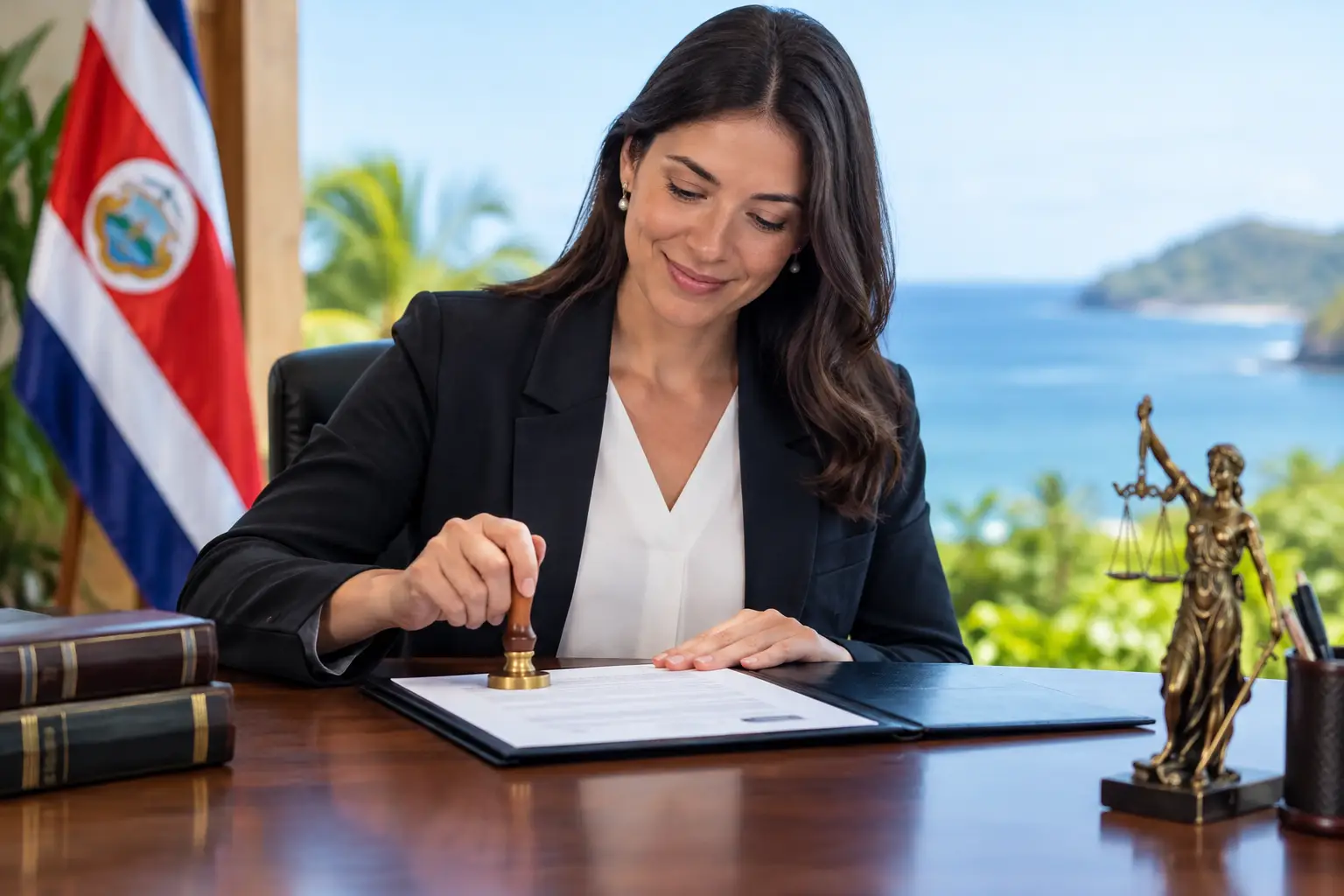
How to Find the Best Costa Rica Notaries
A Costa Rican notary may be involved in some of the most consequential moments of your move: buying property, forming a company, granting a power of attorney, or formalizing documents for residency. That is why the search for the best Costa Rica notaries should not be based on a quick online listing, a recommendation from a real estate agent, or the lowest quoted fee.
For North Americans, the word “notary” can be misleading. In the United States and Canada, a notary often verifies identity and witnesses signatures. In Costa Rica, a notario público is generally an attorney with additional authorization to perform notarial acts. Their work can create, formalize, and register legally significant transactions. Choosing carefully is not just a matter of convenience. It is part of protecting your investment, legal status, and peace of mind.
What a Costa Rican Notary Does
Costa Rican notaries prepare and authorize public deeds and other formal legal instruments. Depending on the matter, they may handle property transfers, corporate formation and updates, powers of attorney, vehicle transactions, certifications, and certain declarations or contracts. Many transactions must be entered into the notary’s official protocol, and some documents must be submitted to the appropriate public registry.
This role gives a notary substantial responsibility. But it also means that “notary services” are not interchangeable. A notary who routinely handles a straightforward power of attorney may not be the best fit for a complex property purchase involving a corporation, existing liens, boundary questions, or a seller located outside Costa Rica.
The right choice depends on the transaction, the professional’s relevant experience, and whether you have clear, independent advice before signing. A capable notary should explain the process in plain language, identify what they are and are not responsible for, and tell you where additional legal or tax guidance may be needed.
How to Choose Among the Best Costa Rica Notaries
Rather than looking for a single universally “best” notary, look for a qualified professional whose experience matches your situation. For an expatriate, communication, diligence, and independence are often as important as technical credentials.
Confirm Professional Status and Current Authorization
Start by confirming that the person is an attorney and is authorized to act as a Costa Rican notary. Ask for their full legal name and professional details, then make sure the information is consistent with the documents they prepare. A legitimate professional should not be evasive when asked about credentials, scope of work, or the fees involved.
This step matters because informal helpers, translators, real estate contacts, and facilitators may be useful in limited roles, but they are not substitutes for a properly authorized legal professional. If someone says a formal deed or registration can be completed without appropriate notarial involvement, treat that as a reason to pause and ask more questions.
Match the Notary to the Transaction
Experience should be specific. If you are buying a home, ask how the professional approaches title review, registry research, municipal issues, corporate ownership, and closing documentation. If you are establishing a business, ask about corporate books, shareholder structure, tax registration, and the ongoing obligations that may follow formation.
For residency-related matters, a notary may be needed for declarations, powers of attorney, translations, or document formalities. The immigration process itself can involve separate legal and administrative work, so ask who will be responsible for each portion. Clear division of responsibilities prevents the frustrating situation where every party assumes someone else is handling a critical step.
Look for Clear English Communication
You do not need a notary to be a native English speaker, but you do need to understand what you are signing. If your Spanish is limited, ask how documents and explanations will be provided. Will you receive a written English summary? Who will answer questions before the signing appointment? Is a certified translation necessary for your particular document?
A reliable professional will welcome these questions. They will not pressure you to sign because “that is how it is done here.” Costa Rican legal documents can be formal and technical. You deserve enough time to understand the purpose, effect, price, and obligations of the transaction.
Ask for a Written Scope and Fee Explanation
Before work begins, request a clear description of services. It should identify the transaction, the anticipated steps, the professional fees, government charges, registry fees, taxes where applicable, and any expected third-party costs. Not every cost can be known on day one, especially in a complicated transaction, but the process and billing approach should be transparent.
Be cautious when a quote is unusually vague or dramatically lower than other estimates. A low initial number may exclude due diligence, registry filings, document preparation, translations, or follow-up work. The better question is not “What is the cheapest option?” It is “What protection and work are included for this fee?”
Preserve Independence When Large Money Is Involved
For property purchases and other high-value transactions, independence matters. A notary can serve the legal formalities of a transaction, but a buyer should understand whether that professional is also connected to the seller, developer, broker, lender, or project. A shared professional is not automatically improper, but it can create a conflict or leave you without someone focused solely on your interests.
In significant transactions, consider obtaining independent legal advice or having your own attorney review the matter. This is particularly wise when there are unusual payment arrangements, unregistered improvements, coastal or concession-zone property, inherited property, corporate shares, or promises that are not clearly reflected in the written documents.
Questions Worth Asking Before You Hire
A short conversation can reveal whether a notary is prepared, responsive, and comfortable working with foreign residents. Ask how they have handled transactions similar to yours, what documents they need from you, and what timeline is realistic. Ask who will communicate with you directly and whether you will receive copies of final signed documents and registry confirmations.
It is also reasonable to ask what could delay the transaction. A trustworthy answer may include missing documents, registry inconsistencies, government processing times, tax issues, or the need to correct prior corporate records. No professional can promise that every government filing will be immediate. What they can provide is a realistic plan and prompt communication when conditions change.
For major property or corporate matters, pay attention to how the professional discusses due diligence. You want to hear about verification, documents, and risks, not only assurances that “everything is fine.” Careful professionals ask questions before giving answers.
Warning Signs to Take Seriously
Relocation brings many opportunities to rely on informal advice. Some introductions are helpful, but pressure and shortcuts are not. Step back if you encounter any of the following:
- Pressure to transfer funds or sign documents before you understand the transaction.
- A refusal to provide written fees, receipts, or copies of documents.
- Requests to pay large amounts to a personal account without a clear explanation.
- Claims that title review, registration, or legal formalities are unnecessary.
- A professional who is difficult to identify, difficult to reach, or unwilling to explain their role.
These signs do not always prove wrongdoing, but they do justify slowing down. International movers are often targeted because they are unfamiliar with local procedures and may be eager to complete a purchase or residency step quickly. Taking an extra day to verify information is far less costly than repairing a legal problem later.
Prepare Before Your First Appointment
You can make the notarial process more efficient by bringing a clear description of your goal and complete identification documents. If the matter involves a company, property, or another party, gather any existing contracts, registry information, prior deeds, tax records, or correspondence. Do not assume an informal translation is sufficient if the document will be used in an official filing.
It also helps to write down your questions in advance. Ask what you will sign, what occurs after signing, who files the documents, and how you will know the transaction is complete. Keep digital and paper copies of everything you provide and receive. Good records are useful for residency renewals, banking, tax matters, insurance, future property sales, and estate planning.
ARCR has spent more than 30 years helping foreign residents coordinate the legal, administrative, and practical details of life in Costa Rica. When you need notarial support as part of a larger move, experienced guidance can help you understand the process, organize the right documents, and avoid being left to manage unfamiliar steps alone.
A good Costa Rican notary does more than place a stamp on a document. They help turn an important decision into a properly documented, legally sound step forward. Give yourself permission to ask questions, request clarity, and choose professional support that earns your confidence before you sign.