





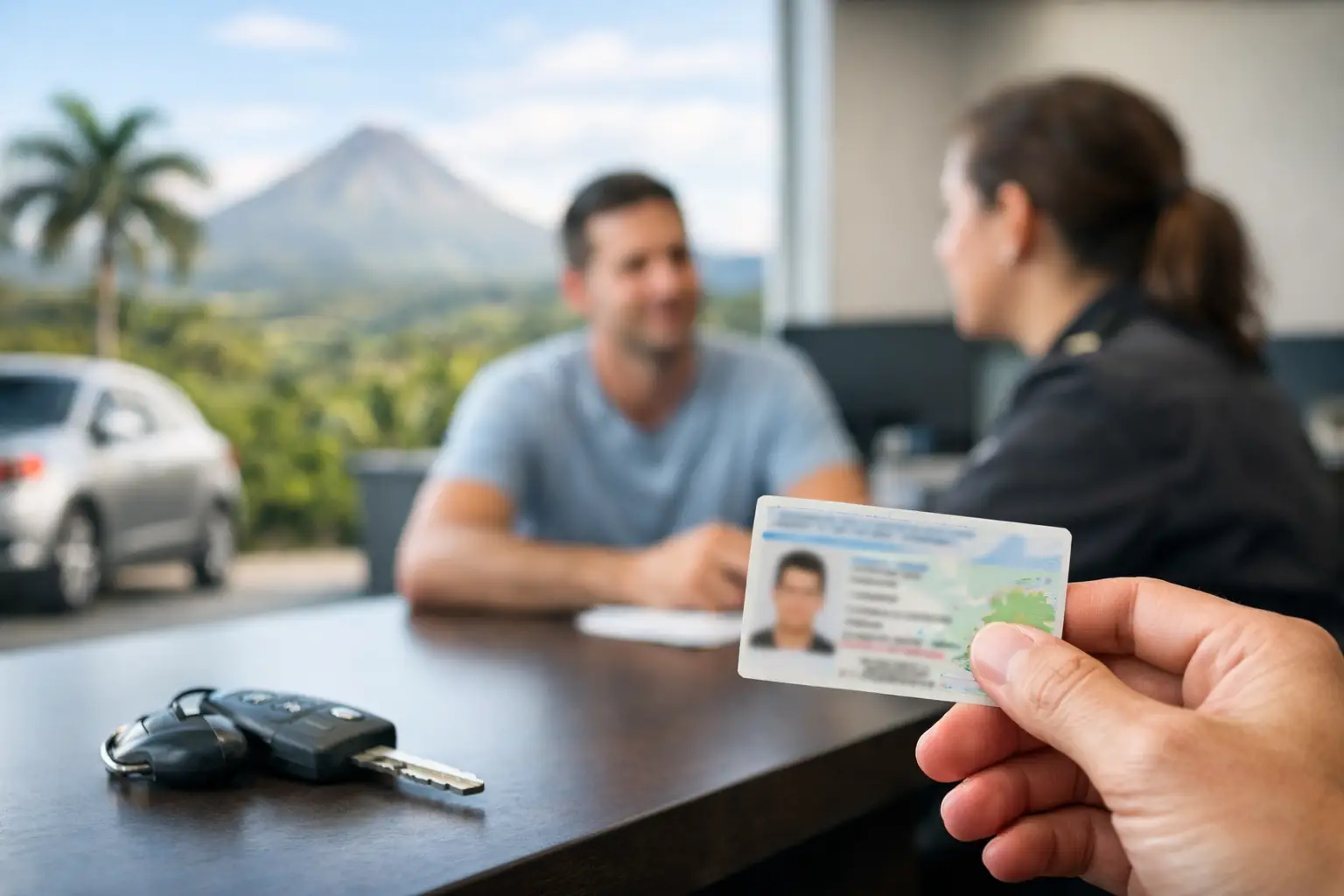
How to Get a Costa Rica License as a New Resident
A valid foreign driver’s license may be enough for a short visit, but it is not a long-term driving plan once Costa Rica becomes home. If you are researching how to get a Costa Rica license, the most useful first step is identifying which path applies to you: validating an existing license or qualifying through Costa Rica’s testing process.
The process involves more than showing up at a licensing office. Appointments can be limited, document rules can change, and a small mismatch in your name, residency status, or paperwork may mean a second trip. With proper preparation, however, getting licensed is a manageable part of settling into life in Costa Rica.
Who needs a Costa Rica driver’s license?
Visitors may generally drive with a current foreign license for the period they are legally permitted to remain in Costa Rica as tourists. Carry your passport and entry documentation with you when driving, and make sure your license covers the type of vehicle you are operating. A rental company’s rules and insurance conditions may be more restrictive than the basic traffic rule, so read those terms carefully.
Legal residents should plan to obtain a Costa Rican driver’s license. This includes permanent residents and temporary residents such as pensionados, rentistas, investors, and many work-authorized residents. Relying indefinitely on a foreign license after becoming a resident can create trouble during a traffic stop, insurance claim, or license renewal.
Your situation matters. A person who has held a valid license in the United States or Canada for years may be able to pursue validation of that license. Someone whose foreign license has expired, is suspended, cannot be verified, or does not cover the needed vehicle class may need to take Costa Rican exams instead.
How to get a Costa Rica license through validation
For many new residents, validation - sometimes called homologation or convalidation - is the more direct route. It is designed for drivers who already have a current, legitimate license from another country and want a Costa Rican license in the equivalent category.
The responsible agencies and individual offices may update their procedures, so do not rely on an old social media post or advice from a neighbor who completed the process years ago. Confirm the current instructions before you schedule an appointment or arrange translations.
Start with your residency identification
You will normally need proof that you are legally resident in Costa Rica. For most residents, this means a current DIMEX card, along with identification such as a passport. The names, dates of birth, and other personal details on every document should match. If your married name differs from the name on your foreign license, bring the document that explains the change, such as a marriage certificate.
If your DIMEX is in process, ask specifically whether the licensing authority will accept your immigration receipt or whether you must wait for the physical card. This is one area where assumptions can waste time.
Gather evidence of your current foreign license
Bring the original, unexpired license from your home jurisdiction. Depending on the country that issued it and the current licensing procedure, you may also be asked for a driving record, official certification, or a document confirming that the license is valid and in good standing.
Documents issued outside Costa Rica may need an apostille or consular legalization before they can be used locally. If a document is not in Spanish, it may require an official Spanish translation. Do not translate or apostille paperwork automatically without confirming what the licensing office needs. The right document is valuable; an expensive document prepared in the wrong format is not.
A practical precaution is to obtain an official driving record before leaving your home country or while you can still request it easily. State and provincial motor vehicle departments have different procedures, and records can take time to arrive internationally.
Obtain the required medical certificate
Costa Rica requires a digital medical certificate, commonly known as a dictamen médico, for driver’s license transactions. A licensed physician completes it after a basic evaluation that may cover vision, medical history, medications, and general fitness to drive.
The certificate is entered into the relevant system electronically, but keep your receipt and verify that your identifying information is correct. These certificates have limited validity. Schedule the medical appointment close enough to your licensing appointment that it will still be active when your application is reviewed.
Reserve and attend your appointment
Driver’s license services are handled through the appropriate Costa Rican transit and licensing authorities, often associated with COSEVI or designated service locations. Appointment procedures, locations, fees, and available services can vary. Some applicants must use a particular office for validation, while others can use an authorized location that offers licensing services.
Arrive with originals and copies where requested. Bring proof of fee payment if the process requires payment in advance. It is also wise to carry every supporting document in an organized folder, including your passport, DIMEX, foreign license, medical certificate receipt, translations, apostilles, and driving record.
At the appointment, staff review the documents and determine the Costa Rican license category that corresponds to your foreign license. The local license may not automatically include every category shown on your home-country card. Motorcycle, commercial, and heavy-vehicle privileges often involve separate requirements.
When you may need to take the Costa Rican exams
Validation is not guaranteed. You may need to complete the regular licensing process if you do not have an eligible foreign license, your documentation cannot be authenticated, you are applying for a category not supported by your current license, or the authority determines that testing is required.
This route usually begins with the theoretical driving exam. The exam is offered in Spanish, so applicants who are not comfortable reading Spanish should allow time to study the official material and understand Costa Rican road terminology. Do not treat this as a formality. Road signs, right-of-way practices, speed rules, and local traffic vocabulary may differ from what you learned at home.
After passing the written portion, you may need to complete a practical driving test for the class of license you seek. The practical exam can require a properly equipped vehicle, current registration and insurance, and compliance with safety requirements. Test conditions and scheduling can vary by location.
The testing route takes more planning, but it may be the right choice for a resident who has never held a foreign license, whose license has lapsed, or who wants a license category beyond ordinary passenger vehicles.
Avoid the problems that cause the most delays
The most common obstacle is incomplete paperwork, not driving ability. An apostille missing from a required foreign record, a translation that does not meet official standards, or a medical certificate that expired before the appointment can stop the process.
Timing is another issue. Residency status, medical certificates, appointment dates, and foreign document validity all have their own deadlines. Work backward from the date you hope to begin driving as a resident. If you expect to sell your foreign vehicle, buy a Costa Rican vehicle, or commute to a new home soon after receiving residency, do not leave licensing until the last week.
Be cautious about anyone promising a license without the required documents, medical review, appointment, or official process. A legitimate Costa Rican driver’s license is issued through the proper authorities. Shortcuts can leave you with unusable paperwork and greater risk on the road.
Plan for renewal and everyday driving
Once issued, keep track of the expiration date on your Costa Rican license. Renewal requirements can include an updated medical certificate and payment of applicable fees. The validity period may depend on your age, license category, and current regulations.
Keep your license with you when driving, along with the documents required for the vehicle. If you own a car, that generally includes current registration and mandatory insurance documentation. If you are borrowing or renting a vehicle, confirm that the insurance recognizes you as an authorized driver.
A driver’s license is a small card, but for a new resident it represents a larger transition: being able to handle errands, medical appointments, school runs, and weekend travel with confidence. A careful review of your documents before you begin can make that transition much calmer. For residents who want experienced help coordinating residency, translations, and local administrative steps, ARCR can help bring the pieces together before a missed document turns into a missed appointment.