





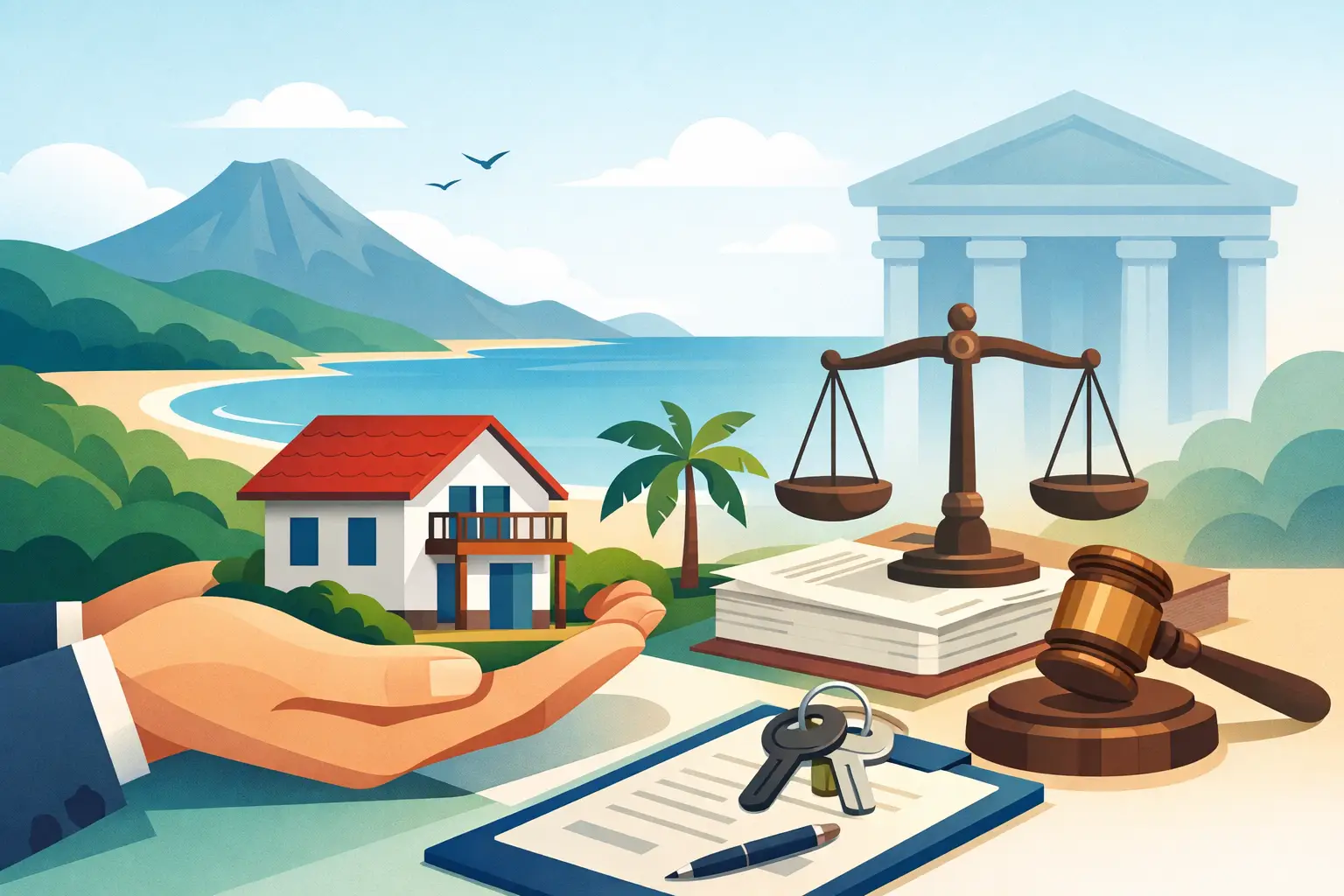
Buying Property in Costa Rica Legal Help
A house with an ocean view can make almost any buyer feel ready to sign quickly. In Costa Rica, that is exactly when slowing down matters most. If you are looking for buying property in Costa Rica legal help, the goal is not to make the process harder. It is to make sure the property you fall in love with is the property you can actually own, use, and enjoy without expensive surprises.
Costa Rica remains a strong draw for retirees, remote workers, investors, and families who want a different pace of life. The market offers everything from mountain homes to beachfront condos and development land. But foreign buyers are stepping into a legal system, language, and property culture that may work very differently from what they know in the US or Canada. Good legal guidance is what turns a promising purchase into a safe one.
Why buying property in Costa Rica legal help matters
The biggest mistake foreign buyers make is assuming a real estate agent, seller, or notary will protect their interests in the same way a personal attorney would back home. Sometimes those professionals are helpful and ethical. Sometimes they are not focused on the same risks you would care about as a buyer.
Legal help matters because property problems in Costa Rica are not always obvious from a listing or a site visit. A lot may appear buildable but have zoning restrictions. A home may be occupied legally or informally by someone other than the seller. A beautiful parcel could be inside a maritime zone, affected by concessions, or subject to access questions that change its value completely.
This is also where buyers can get caught by false confidence. Seeing a registration number or hearing that a property is "fully titled" is not the same as having a lawyer verify ownership, encumbrances, boundaries, corporate status, taxes, and transfer mechanics. The details are what protect your investment.
What legal help should cover before you buy
A proper legal review starts with the property itself, but it should not stop there. In Costa Rica, the transaction often involves both real estate law and corporate, tax, immigration, or family planning considerations.
Title and registry review
One of the first steps is confirming that the seller is the true legal owner and that the property description in the National Registry matches what is being offered. Your attorney should review whether there are liens, mortgages, annotations, easements, lawsuits, or other recorded issues that could affect the transfer.
This sounds basic, but basic is where many bad deals begin. If a seller is using a corporation, your attorney should also verify that the company is in good standing and that the person signing has legal authority to do so.
Boundary and survey issues
A registry check does not replace a physical review. Survey plans, boundary markers, access roads, and neighboring uses all matter. In some areas, the property on paper and the property on the ground are not perfectly aligned.
That does not always mean the deal is bad. It does mean you need clarity before money changes hands. Sometimes the issue is fixable. Sometimes it changes what the property is worth. Sometimes it is the reason to walk away.
Zoning, land use, and concessions
This is one of the most overlooked parts of buying property in Costa Rica legal help. Buyers often assume that if a home exists, it must be compliant, or if land is marketed for development, it must be buildable. That is not always true.
Your legal team should examine municipal zoning, land use rules, water availability, building permit history where relevant, and whether the property sits in a regulated area such as the Maritime Zone. Beach property can be especially appealing and especially complex. In some coastal areas, what buyers are getting is not fee simple ownership but rights tied to a concession structure. That can still be workable, but only if you understand exactly what you are buying.
Taxes, utilities, and municipal obligations
Unpaid property taxes, condominium fees, utility bills, or municipal assessments can create trouble after closing. Part of legal due diligence is checking for these obligations and making sure the purchase agreement addresses how they will be resolved.
A lower asking price is not always a bargain if it comes with hidden cleanup costs. Good legal help brings those costs into view early.
The purchase agreement is where protection becomes real
Many buyers focus on the deed transfer and underestimate the importance of the purchase agreement. That contract is where inspection periods, deposit terms, title review deadlines, repair obligations, default rights, and closing conditions should be clearly spelled out.
If the agreement is vague, your leverage drops fast once funds are deposited. If it is too seller-friendly, you may discover problems and still have trouble recovering your money. A solid attorney will tailor the contract to the property and the transaction, not rely on generic wording that leaves room for disputes.
This is also where escrow arrangements matter. Funds should be handled through a secure and properly structured process. Sending money casually, or to the wrong party, is one of the easiest ways for a transaction to go off track.
Buying in your own name or through a corporation
This is one of the most common questions foreign buyers ask, and the answer depends on your goals. Some buyers prefer to hold property in their personal name for simplicity. Others use a Costa Rican corporation for liability planning, privacy, estate planning, or future business use.
There are benefits and trade-offs either way. A corporation can offer flexibility, but it also comes with annual compliance obligations and costs. Personal ownership may be simpler, but it may not fit your broader legal or tax planning. The right choice should be made before closing, not after, because changing structure later can trigger additional expense and paperwork.
For buyers who are also pursuing residency, it also helps to consider how the purchase fits into their larger relocation plan. Property ownership and residency are separate matters in Costa Rica, but they often intersect in practical ways.
Common risks foreign buyers should not ignore
The problem is not that Costa Rica is uniquely risky. The problem is that buyers often relax their standards because they are in vacation mode or eager to secure a dream property.
Watch for pressure to close quickly, reluctance to share documents, claims that due diligence is unnecessary, or advice to skip independent legal review because "everyone does it this way." Those are not signs of a smooth transaction. They are signs to pause.
Another issue is relying on informal translations or verbal explanations. If you do not fully understand a document, ask for a certified translation or a plain-English explanation from your legal team. This is not being difficult. It is being careful.
And while many transactions are straightforward, rural land, inheritance sales, beachfront property, and corporate-owned assets usually deserve extra scrutiny. The more unusual the property, the more valuable experienced legal review becomes.
Choosing the right legal support
Not all legal help is equal. You want someone who understands Costa Rican real estate law, works comfortably with foreign buyers, communicates clearly in English, and is prepared to coordinate with the other parts of your move if needed.
That last point matters more than many people expect. Buying property is often tied to residency timing, insurance planning, document translation, business formation, or long-term settling in. A legal team that sees the bigger picture can prevent bottlenecks and reduce stress.
This is one reason many expats choose organizations such as ARCR, where legal support is part of a broader relocation framework built around practical help, experience, and protection from avoidable mistakes.
A safer way to move forward
If you are serious about buying in Costa Rica, do not wait until closing week to ask legal questions. Start before you sign a purchase agreement, before you wire a deposit, and before you assume the deal is routine.
The right property can still be the right property after careful review. And if legal due diligence reveals a problem, that is not bad news. It is valuable information that protected your money and your future.
Buying abroad should feel exciting, not uncertain. With the right legal help, you can move forward with clear eyes, realistic expectations, and far more confidence in the life you are building here.